
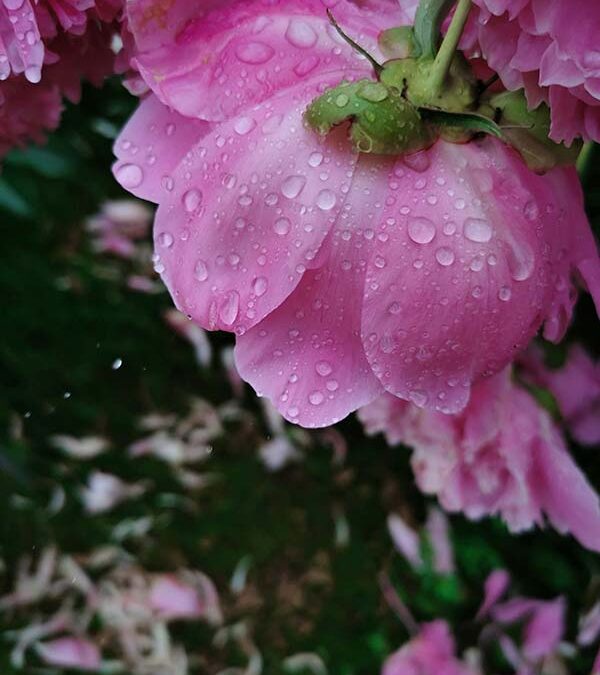
Honoring emotional and mental well-being as sacred work — a return to balance, compassion, and wholeness.
It looks like admitting you’re not okay.
Like taking a break.
Like asking for help when the weight becomes too much to carry alone.
Not all wounds are visible.
Some live quietly inside us—shaping our breath, dimming our light, or whispering lies about our worth.
We learn to smile while carrying storms no one sees.
But silence doesn’t mean peace.
And pain doesn’t mean failure.
Across many cultures—including our own in the Philippines—we are taught to endure.
To keep going.
To pray harder.
To laugh through struggle because others have it worse.
Yet mental health isn’t a luxury or a weakness; it is a reflection of our humanity.
It is sacred work to tend to what the heart and mind are trying to say.
Still, mental health remains wrapped in stigma.
And beyond the silence lies another truth—there simply aren’t enough safe or progressive spaces for people to turn to.
There are too few therapists, limited programs, and even less understanding of how trauma touches both body and spirit.
For many, emotional pain is carried quietly because there’s nowhere safe to place it.
These challenges often show up in ways we don’t immediately recognize—
as fears, doubts, stresses, anxieties, traumas, and the quiet heaviness that lingers.
They shape our moods and emotions, influence how we connect with others,
and even affect how we think, learn, and cope each day.
What happens in the mind echoes through the body and spirit.
We cannot separate one from the other.
Because emotional pain doesn’t only live in the mind—
it seeps into the body,
tightens the chest,
weighs on the heart,
and dims the light of the spirit.
When left unspoken, it becomes illness,
and the soul begins to forget its own song.
When the mind feels heavy, it’s not betraying you—it’s speaking to you.
It’s the soul’s way of asking for attention, saying:
“Please slow down. Please listen. Something within me is ready to heal.”
Healing the mind is not separate from healing the spirit.
The heart, body, and mind form one temple—all of them holy.
Caring for your emotional well-being is not a sign of weakness; it’s an act of reverence.
A declaration that you are worthy of peace.
As a Babaylan, I see healing as something whole—
a sacred weaving of mind, body, heart, and soul.
My own self-healing journey meant diving deep into every layer—
emotional, mental, physical, and spiritual—
because all are connected.
We cannot heal one without tending to the others.
Even healers, teachers, and those who carry light experience emotional fatigue.
We, too, walk through shadows.
There are days when holding space feels too heavy,
when empathy turns to exhaustion,
and silence becomes a form of survival.
But within those moments, we learn compassion—
how to rest, how to listen, how to trust the light again.
And from that lived experience,
we gather the wisdom that allows us to guide and hold others
as they find their own way back to wholeness.
Still, it’s important to remember—
not all healers are mental health professionals.
While we offer energy work, intuitive guidance, and spiritual care,
professional therapy provides a different—and essential—kind of support.
Together, these paths complement one another beautifully.
I often encourage my own clients to seek therapy when needed—
just as many therapists also receive healing and supervision themselves.
Healing, in all its forms, is never meant to be walked alone.
In recent times, we’ve lost luminous souls—artists, singers, creators—who gave beauty to others but struggled quietly in their own hearts.
Their stories are not meant to leave us in sorrow but to remind us of the importance of reaching out, listening deeply, and holding space for those who feel unseen.
No one is beyond the need for care, softness, and understanding.
The light they carried still touches us—calling us to compassion for ourselves and for one another.
Healing takes many forms.
For some, it’s prayer or meditation.
For others, therapy, medicine, movement, or energy work.
All are sacred when rooted in love.
Spirit works through both science and soul—through people, places, and practices meant to restore us.
There is no one way back to balance; there is only the willingness to listen to what your being needs now.
If your mind feels tired, if your heart feels heavy—pause.
Breathe.
Ask for help.
You are not broken.
You are human.
And even in your unraveling, you are sacred.
May the noise quiet long enough for you to hear your own breath again.
May gentleness find you when you’ve forgotten how to reach for it.
May you remember: your mind is not your enemy—it is the keeper of your becoming.
When one of us tends to our mental health, we tend to the collective.
Because when we begin to heal, we start to listen—to our own hearts, to one another, and to the world.
The more we honor our inner worlds, the more empathy we bring into our families, communities, and culture.
The Great Healing isn’t only about changing systems or structures; it begins here—
in the quiet moments when we choose compassion over shame, presence over pretending.
So if today all you can do is breathe, rest, or reach for support—that is enough.
That, too, is sacred work.
Let’s meet mental health not with fear or shame,
but with sacred awareness.
Because every mind, every heart, every soul—is holy. 🌿
© 2025 • Charmaine Cheryle | The Modern Babaylan