
The Great Healing: What Pax Silica Reveals About Sovereignty and Responsibility
Sometimes that questioning begins quietly, through a personal experience that challenges something we have long believed. Other times, it becomes visible when individuals and communities begin questioning decisions made on their behalf, particularly when those decisions may change how they live and what they are able to preserve.
In the Philippines, we are witnessing one such moment.
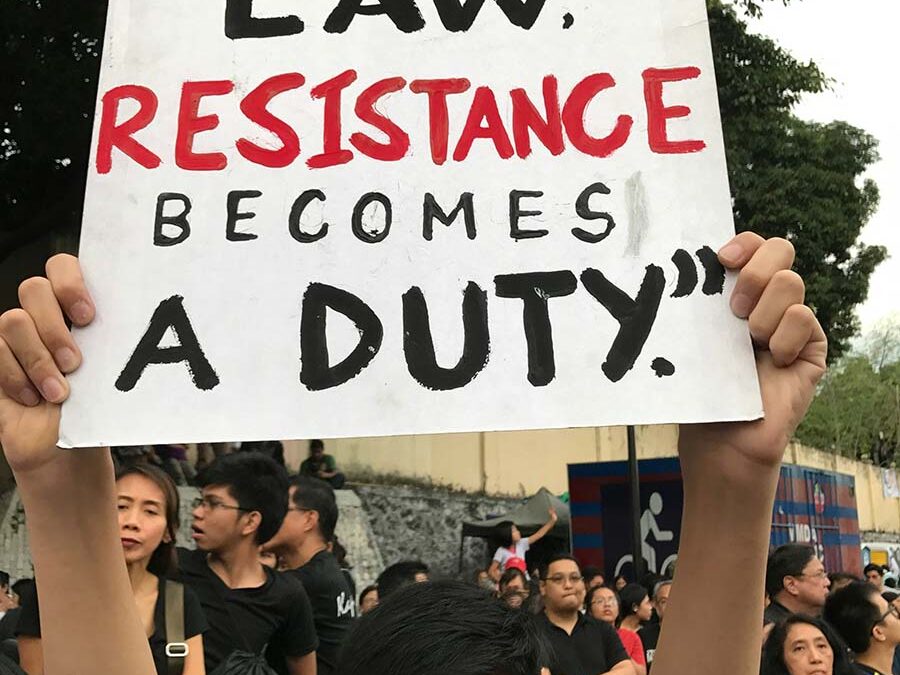
The protests unfolding in the Philippines amid the ASEAN Summit have brought several concerns into public view. Among them are rising living costs, questions of government accountability, opposition to aspects of U.S. involvement in the region, and the proposed industrial development at New Clark City, part of the broader U.S.-led Pax Silica initiative.
Indigenous Ayta communities, students, farmers, and other citizens have raised concerns about the proposed development, particularly its potential effects on ancestral lands, the environment, and livelihoods, as well as whether those directly affected have been meaningfully included in decisions about their future.
The Philippine government has emphasized the potential for investment, employment, and technological advancement. These opportunities deserve consideration, as do the concerns of communities whose lives and ancestral lands may be affected. What is presented as progress for a nation can carry different meanings for the people who may bear its consequences.
As an Indigenous Filipina and tribal member, I understand the deep connection between our people and the land. It carries our history, ancestral memory, cultural traditions, and spiritual relationships. I also understand the desire and responsibility to protect these lands, not only for ourselves but for the generations who will come after us.
My Indigenous heritage is one part of how I experience and understand the world. I also live with the effects of economic pressures, government decisions, and policies that shape our daily lives. I question how authority is exercised, whose interests are considered, and how the choices being made today may affect us and future generations.
I see these same concerns arising in different parts of the world. The circumstances may differ from one country or community to another, yet many of the underlying questions about sovereignty, accountability, and responsibility are shared.
And as I reflect on these matters, I recognize that I am also participating in the very world whose structures, beliefs, and practices I am questioning.
When individuals and communities begin questioning decisions that affect their lives, they exercise an important aspect of their sovereignty. Yet speaking out is only one part of the process. There is also the responsibility to examine information, understand differing perspectives, and consider what our choices may mean for ourselves and others.
These moments invite us to look beyond the immediate controversy and consider our relationship with authority, the beliefs we have inherited, and the role we play in shaping the world around us.
For me, this exploration is part of something larger, something I call the Great Healing.
Awareness Is Only the Beginning
Awakening is often spoken of as though it were a destination, something we arrive at once we become more conscious of ourselves and the world around us. Yet awareness is only the beginning.
We may begin to recognize patterns in our relationships, question beliefs we have carried for years, or become conscious of circumstances we once accepted as simply the way things are. Something within our understanding begins to shift, and what once seemed familiar may now invite closer examination.
But what happens next?
Some may feel guided to act upon what they are discovering. Others may need time to understand what their growing awareness means for their lives. There are also those who continue as before, even when they recognize that something no longer feels right. Changing what is familiar can be difficult, particularly when our decisions affect the relationships, responsibilities, and circumstances upon which we depend.
Becoming aware of something does not necessarily mean we understand it fully. We may recognize that a situation is affecting us without knowing why, or begin questioning a belief without yet understanding how deeply it has influenced our choices.
This is where discernment becomes essential.
Discernment invites us to look more closely at our experiences and the information available to us, distinguishing what we know from what we believe or assume. Our emotions, past experiences, and expectations also influence how we perceive what is happening.
As our awareness deepens, we may discover that our understanding is incomplete or that perspectives we had not previously considered offer something important. Being willing to question ourselves becomes just as necessary as questioning what others have told us.
For me, the Great Healing involves this deeper process of awareness, examination, and transformation. It is the gradual reclaiming of our individual sovereignty: the ability to understand ourselves, exercise our judgment, and make choices with greater consciousness of their consequences.
Yet this process does not unfold in isolation.
Our beliefs and choices influence how we relate to others. What we begin to recognize within ourselves can change how we participate in our families, communities, and the wider world.
A person who becomes aware of an inherited expectation may begin questioning whether it should continue. Someone who has remained silent may recognize that their perspective deserves to be heard. Another may discover that practices they once accepted within an institution or community deserve closer examination.
These moments do not guarantee change, nor do they necessarily lead people toward the same conclusions. But they create opportunities for us to engage more consciously with what has shaped our lives.
And as individuals begin questioning the beliefs and expectations they have inherited, those questions can extend beyond their personal circumstances.
What begins within one person may eventually influence how an entire community understands and exercises its power.
When Individual Change Becomes Collective
Much of what we believe and expect from ourselves and others is shaped by our families, cultures, communities, institutions, and the societies in which we live. Some of these influences provide stability, belonging, and a sense of identity. Others establish patterns of authority and control that may continue across generations without being questioned.
When individuals begin examining these influences, they may discover how deeply certain expectations have shaped their understanding and choices. What once seemed natural or unquestionable may begin to look different.
Consider someone who has grown up believing that questioning an elder or authority figure is disrespectful. As they become more conscious of that belief, they may begin to distinguish between respecting another person and surrendering their ability to think or decide for themselves.
They may still value their traditions and honor those who came before them while recognizing that respect does not require unquestioning obedience.
The implications of that realization can extend far beyond family relationships.
The same beliefs about obedience and authority may influence how we respond to employers, religious organizations, governments, and institutions. They can also shape our willingness to question the expectations society has established as acceptable, necessary, or correct.
As individuals begin examining these assumptions, their relationships with others may change. Conversations that were once avoided become possible. Long-standing expectations may be challenged, and people may seek greater transparency or participation in decisions affecting their lives.
When these changes extend beyond the individual, they can influence the practices and structures of an entire community.
This does not mean that every established structure must be dismantled or that change is beneficial simply because it challenges what already exists. Some structures protect rights, preserve knowledge, and support communities. Others may have developed in ways that concentrate authority while limiting the voices of those affected.
Discernment becomes important in recognizing these differences. We need to consider what deserves to be preserved, what requires examination, and what may have outlived its purpose.
There is also a difference between recognizing one’s sovereignty and having the freedom to exercise it.
An individual may understand their rights and still face economic dependence, social pressure, institutional resistance, or legal barriers. Becoming aware of these circumstances does not automatically remove them. Collective action, accountability, and meaningful protections may also be necessary.
This brings us back to the demonstrations unfolding in the Philippines, where people are raising concerns about decisions affecting their communities, livelihoods, and future.
Among them are Indigenous communities questioning the proposed development at New Clark City. Their concerns draw attention to decisions being made in the name of national development and whether those whose lives and ancestral lands may be affected have meaningful opportunities to participate in determining what happens next.
These concerns reach beyond a single development project. They invite us to examine how authority is exercised, whose knowledge and experiences are considered, and whether the people most affected by decisions have opportunities to influence them.
For me, this is one way the Great Healing can begin to take shape in the collective.
As individuals become more conscious of their own sovereignty, they may also become more aware of the sovereignty of others. The freedom they seek for themselves carries a responsibility to respect that same freedom in the people around them.
Yet questioning existing structures is only part of the process. We must also consider what we hope to create in their place.
We may recognize that a system no longer serves people without having fully considered what a more equitable, compassionate, and sustainable alternative would require. Knowing what we want to leave behind doesn’t necessarily mean we know what we want to build in its place.
This is where the responsibility of collective transformation becomes particularly important.
The structures we create must account for people whose experiences, beliefs, and needs may differ from our own. Greater freedom for one group should not depend upon denying another its rights or dignity. And a more harmonious way of living together cannot require silence or conformity in the name of keeping the peace.
If we hope to transform the foundations upon which our societies operate, then the foundations we create deserve the same careful examination as those we seek to change.
Otherwise, we risk reproducing familiar patterns of control beneath the appearance of something new.
Power, Responsibility, and Accountability
As individuals become more conscious of their sovereignty and begin questioning the structures around them, we must also examine the responsibilities of those who already hold positions of power.
Throughout history, governments, institutions, religious organizations, corporations, and other systems of authority have influenced how societies function. They have shaped laws, established expectations, preserved traditions, and determined how resources and opportunities are distributed. Their decisions have affected generations, sometimes in ways that continue long after the individuals responsible are gone.
Power itself carries the capacity to create meaningful change. Those entrusted with authority may begin with sincere intentions to serve, protect, or improve the lives of others. Yet the structures within which they operate can present challenges they did not anticipate.
Institutional expectations, competing interests, financial pressures, political alliances, and the desire to maintain influence may gradually shape their choices. What once seemed clear can become complicated by obligations, compromises, and expectations that are rarely discussed openly.
It raises an uncomfortable question: Can someone become so accustomed to operating within a system that they gradually lose sight of the very principles that led them there?
And when that happens, who holds them accountable?
Those who exercise power are also individuals, capable of questioning their beliefs, examining their decisions, and changing how they relate to others. They are no less responsible for their choices than the people they serve. If anything, the reach of their authority calls for greater accountability, because the consequences of their decisions can extend far beyond their own lives.
Yet accountability must apply consistently. We cannot expect individuals to question their beliefs, acknowledge their mistakes, and take responsibility for their actions while allowing those in positions of authority to operate by a different set of standards.
This is why the Great Healing, as I understand it, cannot concern only those who have lived under established structures of authority. Those who exercise power must also be willing to examine the beliefs, motivations, and practices that influence their decisions.
But accountability cannot depend solely upon someone experiencing a personal awakening or choosing to act with integrity.
A society needs ways to question authority without fear, examine decisions without unnecessary barriers, and address abuses of power regardless of who is responsible. Transparency, independent oversight, meaningful public participation, and protections for those who speak out are among the safeguards that can help prevent authority from becoming unchecked.
Even these protections require attention. Rules may exist on paper while becoming ineffective in practice. Institutions established to provide oversight can themselves become vulnerable to the pressures and interests they are meant to examine.
This is why changing who holds power is not necessarily the same as changing how power operates.
When people call for new leadership, they may have legitimate concerns about those currently in authority. But what happens when someone new takes their place? What expectations will they inherit? What incentives might influence their choices? Will the people they serve have meaningful opportunities to question them, or will they eventually encounter the same barriers under different leadership?
Even when people agree that an existing system needs to change, they may hold very different views about what should replace it. Some may seek greater independence or local authority, while others may favor stronger collective protections or a different distribution of responsibility. Their priorities may reflect different experiences, needs, and understandings of what a better future requires.
How these differences are addressed matters. A new system shaped primarily by the interests of those who are most influential may leave others facing familiar forms of exclusion. Meaningful participation requires opportunities for people to express their perspectives, challenge proposals, and understand how decisions are reached, even when agreement is difficult.
This becomes particularly important when established systems are being transformed or replaced.
A new structure may promise greater freedom, fairness, and participation while quietly retaining practices that once allowed power to become concentrated or protected from scrutiny. Some of these practices may be so deeply embedded in institutional culture that even those entering with sincere intentions come to regard them as necessary or simply the way things are done.
Conscious creation requires us to examine what is being carried forward, including what may not be immediately visible. Otherwise, we may find ourselves living under a different structure while encountering familiar patterns of control.
And when those patterns emerge, the responsibility to question and correct them must remain open to everyone, including those who helped create the new system.
It also challenges us to examine our own relationship with authority. We may question leaders whose decisions we disagree with while giving those we admire the benefit of assumptions we would challenge in others. We may demand accountability from one institution while overlooking similar concerns elsewhere.
Discernment requires a willingness to examine those inconsistencies, including within ourselves.
The Pax Silica controversy brings these questions into focus. Promises of economic advancement deserve examination, as do concerns about ancestral land, environmental consequences, and the rights of affected communities. Meaningful accountability requires more than public assurances. People need access to reliable information, opportunities to participate, and ways to challenge decisions that may affect their future.
The voices of Indigenous communities are particularly important when questions of land, heritage, and intergenerational responsibility are involved. Their participation should not depend solely on whether others recognize the value of what they are seeking to protect.
If the Great Healing involves transforming the foundations of our societies, then our understanding of leadership and authority must also evolve.
Perhaps one measure of that transformation will be whether we create systems in which authority remains answerable to the people it affects, where leadership carries responsibility rather than entitlement, and where the structures themselves help prevent the concentration of unchecked power.
Because the challenge is not simply deciding who should lead.
It is considering how power can be exercised, shared, questioned, and held accountable, even when those entrusted with it change.
The Responsibility of Becoming
When we speak of a new world, whether we call it the New Earth, a new era, or simply a better future, it can be tempting to imagine a time when the struggles we recognize today have finally been resolved.
Yet the possibility of a different future brings us back to the present, to how we are living, what we are discovering about ourselves, and what we are willing to examine along the way.
The Great Healing, as I understand it, is an unfolding process. As we become more conscious of ourselves, our relationships, and the structures that influence our lives, we begin recognizing what we have inherited, what we continue to uphold, and what may no longer align with our understanding of who we are becoming.
There will be uncomfortable discoveries.
We may recognize that beliefs we once defended have limited our understanding. People or institutions we trusted may have acted in ways that conflict with the values they profess. And sometimes, we must confront our own participation in patterns we now wish to change.
Such realizations can challenge our sense of identity, belonging, and security. The familiar may no longer feel comfortable, yet what lies ahead may remain uncertain.
This is where discernment becomes especially important.
Becoming more aware does not mean we suddenly possess all the answers. We may feel strongly about what we are discovering, but our feelings alone cannot tell us everything we need to know. We still have a responsibility to examine information, consider perspectives beyond our own, and remain open to the possibility that our understanding may evolve.
There is also the question of what we do when change becomes possible.
Some will feel called to speak publicly, organize, teach, or challenge established practices. Others may begin within their families, workplaces, and communities, choosing to relate differently to the people around them.
A parent may recognize an inherited pattern and decide to communicate differently with their children. Someone who has long remained silent may begin expressing their needs or perspectives. Another may reconsider how they respond to disagreement, recognizing that the same freedom of thought they seek for themselves must also be extended to others.
These changes may appear small compared with the institutions and systems that shape society. Yet the ways we treat one another influence the expectations, relationships, and practices that become part of our shared lives.
Becoming more conscious is not a process that everyone will experience in the same way or at the same pace. Some changes unfold gradually, while others emerge through circumstances that challenge much of what we thought we understood.
Nor does transformation end when we make a particular decision or reach a new understanding. Life continues to present experiences that invite us to examine ourselves again.
The same is true of the societies we create. A new agreement, a change in leadership, or the establishment of a different institution may open possibilities, but each will encounter circumstances its creators could not fully anticipate. Future generations may question the very foundations we establish with the best intentions.
This is part of the responsibility of becoming: recognizing that growth requires an ongoing willingness to learn, reconsider, and change.
And as our awareness deepens, another responsibility comes into focus.
We must consider how we are living with what we have come to understand.
Personal Responsibility and Conscious Creation
At the heart of conscious creation is personal responsibility.
We may envision a world where people live with greater freedom, dignity, and respect for one another. We may hope for institutions that serve humanity more equitably, communities that honor their differences, and relationships built upon mutual understanding.
But these aspirations also invite us to examine how we ourselves participate in creating the world we experience.
Every day, we encounter circumstances that challenge our understanding, influence our emotions, and require us to make choices. Some experiences bring joy, connection, and opportunity. Others may leave us feeling hurt, angry, fearful, or uncertain.
We cannot always control what happens to us or how others behave. But we are responsible for examining how we perceive our experiences, the meaning we assign to them, and how we choose to respond.
This requires a willingness to look inward, particularly when doing so challenges the explanations we have become comfortable accepting.
Our reactions may be influenced by experiences from childhood, beliefs inherited from our families, expectations established by society, or assumptions we have carried without realizing it.
At times, we may even recognize that the very patterns we object to in others are present in our own behavior.
Such realizations can be uncomfortable. They may ask us to reconsider our judgments, acknowledge mistakes, or take responsibility for choices whose consequences we had not fully understood.
Awareness alone does not resolve these matters. What we choose to do with that awareness is where transformation begins to take shape.
This does not mean holding individuals responsible for circumstances beyond their control or expecting people to overcome systemic barriers through personal effort alone. There are experiences of injustice, hardship, and harm for which responsibility belongs to those who caused them.
Recognizing our sovereignty includes understanding both the authority we possess and the limitations we may face. Within those realities, we can examine our relationship with what is happening and consider the choices available to us.
Personal responsibility also asks us to recognize that our choices rarely affect only ourselves.
The way we communicate with our children may influence how they learn to express themselves. How we respond to disagreement can affect whether others feel comfortable sharing their perspectives. The expectations we uphold in our families and communities may eventually become the patterns future generations inherit.
And when we begin changing those patterns, the effects can ripple outward.
Consider what happens when one person chooses to question a long-held expectation rather than automatically passing it on. Others may begin examining their own experiences. Conversations that were previously difficult may become possible. Over time, the relationships within a family or community may begin to change.
These changes are not guaranteed, nor can any one individual determine how others will respond. But they demonstrate how our participation in the collective begins with the choices we make within our own lives.
Personal responsibility and collective responsibility are connected. Each of us contributes, in different ways and to different degrees, to the environments in which we live.
Conscious creation asks us to become more intentional about those contributions.
If we seek greater freedom for ourselves, do our actions allow others the same freedom? If we expect accountability from those in power, are we willing to acknowledge our own mistakes and examine our decisions with similar integrity?
And when we encounter someone whose beliefs, needs, or experiences differ from our own, how do we honor their sovereignty while remaining true to ours?
These considerations extend into the structures we create together.
The values we wish to see reflected in our institutions must also find expression in how we participate in them. Fairness, cooperation, integrity, and accountability cannot remain aspirations alone. They require choices, practices, and safeguards that help uphold them, including when doing so becomes inconvenient or challenges our own interests.
Conscious creation is an ongoing responsibility. It asks us to remain aware of what we are contributing and what we may be carrying forward from the past without realizing it.
The foundations of a different future are shaped through the decisions we make today, both individually and collectively.
What we choose to create from this awareness remains in our hands.
What We Choose to Create
As demonstrations continue in the Philippines, the issues bringing people into the streets remind us that decisions about the future carry consequences for those who will live with them.
The outcome of the Pax Silica controversy remains uncertain. Yet the questions emerging from this period of public questioning extend beyond any particular development, or even the Philippines. They concern the relationship between authority and those affected by it, the responsibilities we carry toward one another, and the kind of world we hope to leave for future generations.
For me, this is part of the Great Healing.
The world we have inherited has been shaped by countless decisions, beliefs, traditions, and structures developed across generations. Some have protected and sustained us. Others have contributed to separation, inequality, and the concentration of power.
As we become more conscious of these influences, we have an opportunity to examine what we wish to preserve, what we are ready to change, and what we hope to create.
Yet we must also be willing to examine ourselves within that process.
We may call for greater transparency while overlooking our own assumptions. We may seek freedom from established authority while struggling to respect perspectives different from our own. And we may envision a more compassionate world without fully considering what that compassion asks of us in our daily lives.
Conscious creation begins with how we live with the awareness we have gained. It requires us to consider how our choices affect others and whether the foundations we are building reflect the values we profess.
Perhaps the Great Healing unfolds as we recognize that the world we have inherited is not the only world we are capable of creating.
But as we question what has come before us, we must also ask ourselves what we are prepared to take responsibility for creating in its place.
And whether the future we envision truly allows others the same sovereignty, dignity, and freedom we seek for ourselves.
© 2026 • Charmaine Cheryle | The Modern Babaylan
Photo by Vic Alcuaz on Unsplash
Further Reading
For readers interested in exploring the Pax Silica initiative, Indigenous ancestral land concerns, and the broader questions surrounding development and governance in the Philippines:
-
Mongabay — Planned US tech hub in Philippines hit over environmental and Indigenous land concerns. September 23, 2026.
-
Philippine Board of Investments — Discussion on Pax Silica and the AI-Native Industrial Acceleration Hub.
-
Bulatlat — Will the new FPIC guidelines fast-track the Pax Silica hub in ancestral lands? November 14, 2026.
-
Philippine News Agency — Pax Silica facilities to spare Aeta communities, farmers: Palace. November 4, 2026.
-
Republic Act No. 8371 — Indigenous Peoples’ Rights Act of 1997.
-
GMA News — Pax Silica legal framework still on track for end-2026 signing. November 10, 2026.